What is ceviche? The two ceviches of Via Sicilia
Ceviche is a Peruvian dish of raw fish marinated in lemon and seasoned with chili pepper and salt. At Carpaccio Fish Restaurant, at Via Sicilia 45 in Rome, there are two on the menu, €22 each: the Spicy Ceviche and the Truffle Ceviche. Below: where the dish comes from, what leche de tigre is, and what goes into our two ceviches.
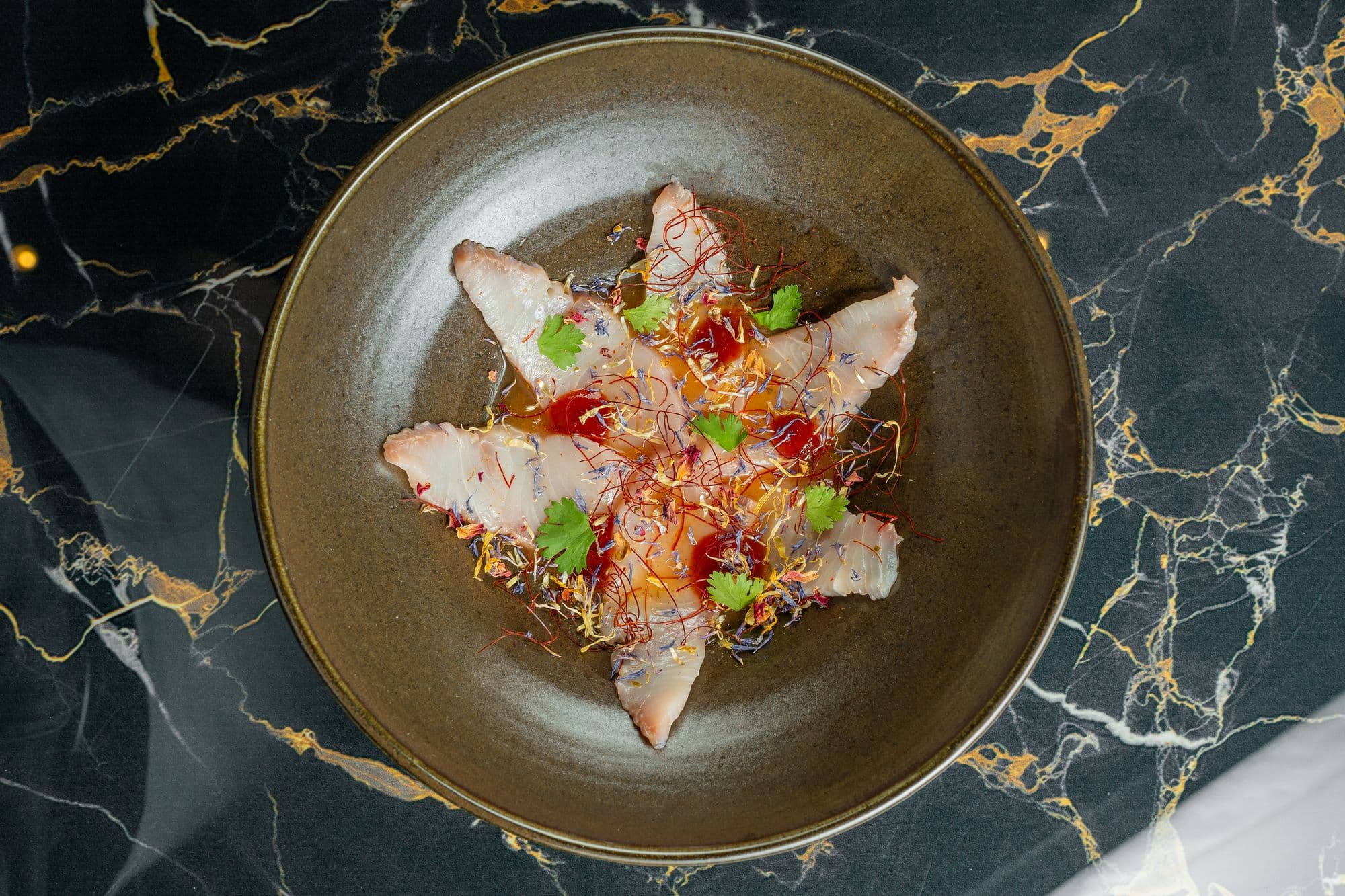
What ceviche is
According to UNESCO, ceviche is a traditional dish of Peru, made with raw fish marinated in lemon, seasoned with chili pepper and salt and served with locally grown produce. In 2023 its preparation was added to the Representative List of the Intangible Cultural Heritage of Humanity, on Peru's proposal.
The entry also says how it is eaten: every day and at festivities. It is sold in cevicherías, the places that serve it, and the techniques are handed down in families. It is tied to the festival of Saint Peter, the patron saint of fishers. Recipes change from one region to another, so there is no single ceviche. You will also see it spelled cebiche, with a b: it is the same dish.
The official Peruvian tourism site, PromPerú, gives a basic recipe (in a French-language article): firm white fish cut into 2 cm cubes, lime juice, red onion, chopped coriander, chili pepper (ají) and salt. The fish is served right away, with sweet potato and choclo, a large-kernel corn.
What is leche de tigre
Leche de tigre means "tiger's milk". It is the name of the preparation in which the fish is "cooked", as PromPerú writes (the quotation marks are theirs). The fish stays raw and never goes near a flame.
We looked for an official definition from the Peruvian government and the tourism board and did not find one. The leche de tigre recipes in circulation come from cooks and newspapers, and each has its own. Here we report what PromPerú says, and for our own leche the ingredients written on the menu.
Ceviche and carpaccio: what is different
Carpaccio is raw fish sliced thin and dressed on the plate. Ceviche is made with fish cut into cubes and marinated, as in the PromPerú recipe. Tartare is cut by knife and dressed without marinating. The differences between the three are covered in our article on fish carpaccio in Rome, with the six carpaccios and four tartares on the menu.
The two ceviches on the Via Sicilia menu
The menu today has two ceviches. We describe them with the ingredients written on the menu.
Spicy Ceviche
Japanese hamachi amberjack, spicy leche, smoky sriracha and chilli threads. It costs €22. As the name says, chili is the main note: the leche is spicy, the sriracha is smoky and there are chilli threads on top. See our article on amberjack and hamachi for the fish; the same fish is in the Tartare Tropical.
Truffle Ceviche
Mediterranean sea bass, truffle leche, pickles, truffle oil and truffle caviar. It costs €22. Truffle appears three times here, in the leche, the oil and the caviar, together with the pickles. For sea bass, and why it is also called branzino in Italy, see our article on spigola or branzino: on our menu Mediterranean sea bass is also in the Tartare Smokey.
Reading a ceviche by its ingredients
In the Peruvian recipe everything turns on a few elements: the fish, lemon or lime, chili pepper and salt. The red onion and coriander come from the PromPerú recipe, and the sweet potato and choclo sit on the plate beside the fish. What changes from one cook to another is the balance between sour and hot, and according to UNESCO recipes vary from region to region.
In the two ceviches in Via Sicilia the starting point changes mostly with the fish, amberjack in one and sea bass in the other, and with the seasoning: chili on one side, truffle on the other. If you want to know in advance what you are ordering, compare the ingredient lists on the menu page and choose between the hot version and the truffle one.
The UNESCO entry adds a detail about the fish: the bearers of the tradition link the quality of the dish to local and sustainable produce, and have set up community measures to protect ingredients, including several fish species.
How to order a ceviche
On the menu page the ceviches come after the tartares and before the grill. A whole dinner on raw fish can run from a carpaccio to a ceviche, or you can pick one ceviche and move on to a hot dish. For two people, one Spicy and one Truffle let you taste both leches and two different fish, amberjack and sea bass.
The menu goes on with the grill (oceanic squid, Atlantic king prawn, fillets of amberjack and sea bass, Canadian lobster), street food, comfort zone and pasta, including Verrigni spaghetti with clams. The bill includes a cover charge: €2 at lunch, €3 at dinner. For allergies and intolerances, ask the staff: we will tell you what is in every dish.
Where to eat ceviche in Rome
Carpaccio Fish Restaurant is at Via Sicilia 45, 00187 Rome, a short walk from Via Veneto, next to Carpaccio Beef Restaurant. It is open for lunch Monday to Friday, 12:30 pm to 3:30 pm, and for dinner Monday to Saturday, 7:00 pm to 10:30 pm (Saturday until 11:00 pm). It is closed on Sunday.
The full menu is on the menu page. To book, call +39 06 5575012 or use the Book button on the site.
See the Carpaccio Fish menu
MenuFrequently asked questions
Is ceviche cooked fish?
No, the fish stays raw, marinated in lemon. PromPerú writes that it is "cooked" in the leche de tigre, and the quotation marks are theirs.
Are ceviche and cebiche the same thing?
Yes, they are two spellings of the same dish. We write ceviche, as on the menu.
What is in the leche de tigre at Carpaccio Fish?
The menu lists the spicy leche of the Spicy Ceviche and the truffle leche of the Truffle Ceviche. For anything else, ask the staff: we will tell you what is in every dish.