Amberjack and hamachi: what's the difference?
Amberjack and hamachi are two different fish of the same genus, Seriola. The Mediterranean amberjack is Seriola dumerili, which the Italian Ministry of Agriculture's official list of fish names (in Italian) calls simply ricciola. Hamachi is a Japanese name for Seriola quinqueradiata, the Japanese amberjack (ricciola del Pacifico in Italian), and only while it weighs between 50 grams and 5 kilos. Both are on the menu at Carpaccio Fish Restaurant. Mediterranean amberjack is in the Kaffir carpaccio and the grilled fillet. Japanese hamachi amberjack is in the Tropical tartare and the Spicy Ceviche.
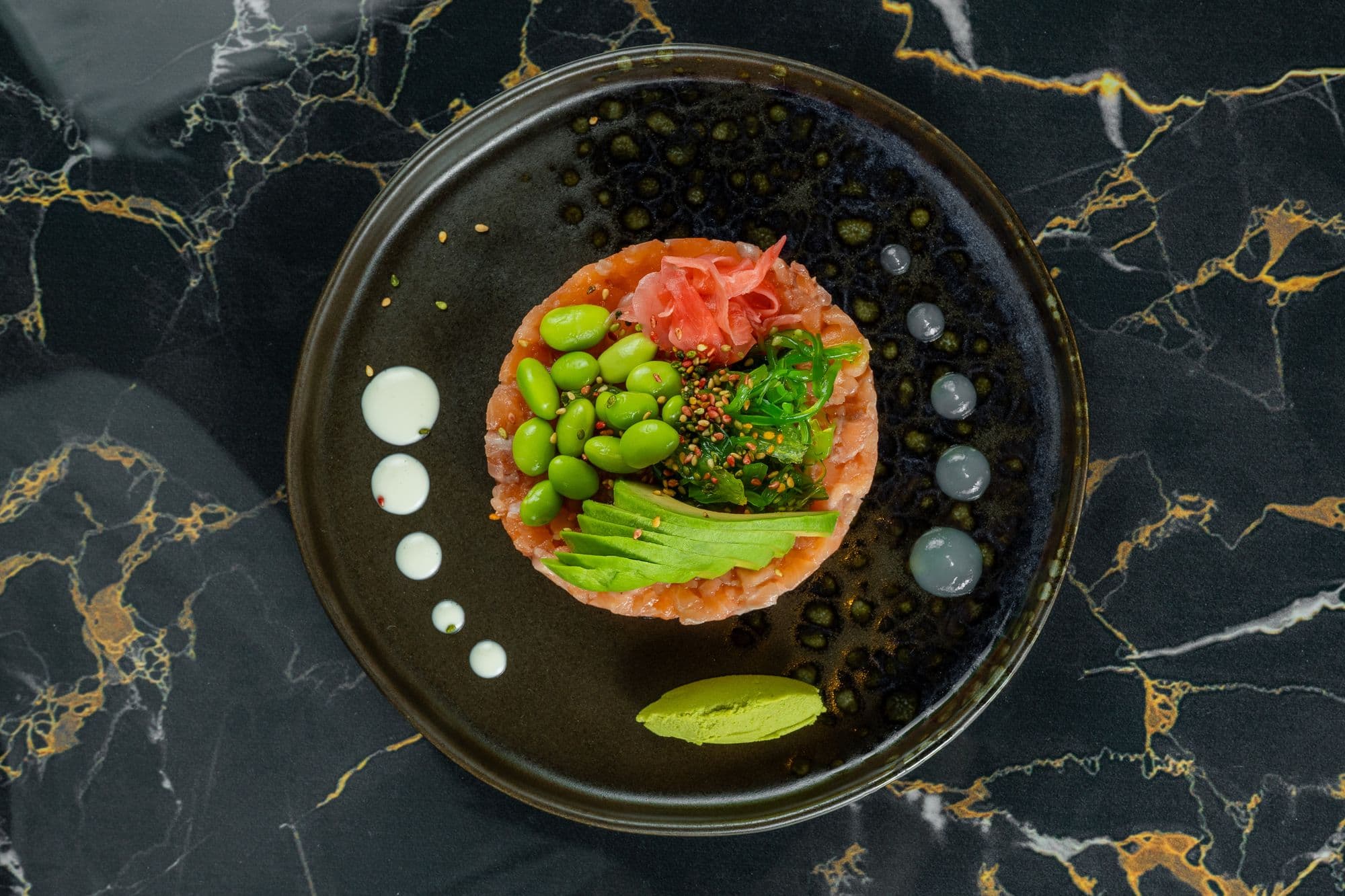
Hamachi and Mediterranean amberjack: two species, one family
Amberjacks belong to the Carangidae, the family of the horse mackerel (suro or sugarello in Italian) and the leerfish (leccia). The Ministry's list, which gives an Italian name to every species sold, includes six species of Seriola. Besides the amberjack and the Japanese amberjack there are the Atlantic ricciola atlantica (Seriola carpenteri) and three species called ricciola oceanica (Seriola lalandi, Seriola nigrofasciata and Seriola rivoliana).
The bare name ricciola therefore belongs to one species only, Seriola dumerili. The others always carry a second word that sets them apart. As we saw for spigola (the article is in Italian), the tag must show the scientific name next to the Italian one, and that is where you can tell which amberjack you are buying.
The Mediterranean amberjack
The FAO fact sheet on Seriola dumerili calls it greater amberjack in English, pez de limón in Spanish and sériole couronnée in French. It is a big fish: it grows to at least 190 centimetres, although the common size is between 30 and 50.
The body is elongated and slightly flattened at the sides. The back is usually blue or olive green, the flanks and belly range from silver to white. A darker bar runs from the eye to the start of the dorsal fin, and an amber band often starts at the eye and runs along the middle of the flank.
It lives both near the bottom and in open water, usually between 20 and 70 metres deep, though it has been caught as deep as 360. It frequents offshore reefs and drop-offs, in small schools or alone, and eats mostly other fish. Young fish stay close to the plants and debris floating offshore.
It is caught with nets, longlines, hand lines and trolling, both commercially and in sport fishing. At market, the FAO writes, it arrives fresh, chilled or frozen.
Hamachi: a name that changes with size
In Japan, Seriola quinqueradiata does not have a single name. The FAO fact sheet explains that the common name changes with weight:
- under 50 grams it is mojako;
- from 50 grams to 5 kilos it is hamachi;
- over 5 kilos it is buri.
On top of this there are different names from one region to another. So hamachi is the Japanese amberjack within a certain weight range.
This species also has an elongated body, with a yellow stripe along its length. The FAO considers it endemic to Japan and the nearby waters, and records it in the Pacific catch from Japan and the east coast of Korea as far as Hawaii. It is a fast predator that hunts mackerel, horse mackerel, sardines and squid by day.
Japanese farming began in 1927 in Kagawa Prefecture, with young fish caught at sea and raised in coastal pens. According to the FAO it is the most farmed fish in Japan: in 2003 it alone made up about 57% of all the marine fish farmed in the country. It still depends mostly on wild-caught young fish, and apart from Japan only South Korea reports production to the FAO.
Most farmers bring the fish to 2-5 kilos, some to 7-8. The flesh is eaten mostly raw, as sashimi; a smaller share goes into soup or onto the grill. In Japanese fish shops it is mostly sold as fillets, in supermarkets also whole.
Raw or cooked: amberjack on the menu in Via Sicilia
On the menu the Mediterranean amberjack appears both raw and cooked, the hamachi only raw, which is also how it is most often eaten in Japan.
The Kaffir carpaccio is made with Mediterranean amberjack, kaffir lime leaves and coriander, ginger mayo, turmeric, lemongrass and a spicy dressing. Kaffir lime and lemongrass are flavourings from Southeast Asian cooking; the heat comes from the dressing.
If you prefer it cooked, the amberjack fillet is in the grill section.
Japanese hamachi amberjack is in two dishes. In the Tropical tartare it comes with yuzu salt, mustard mayo and mango sauce. In the Spicy Ceviche it comes with spicy leche, smoky sriracha and chilli threads.
Of the raw dishes, Kaffir and Tropical are furthest apart: herbs and heat in the first, mango and yuzu in the second. Yuzu is a citrus fruit widely used in Japanese cooking.
Amberjack or hamachi: which to order
If you want to try amberjack both raw and cooked, stay with the Mediterranean one: the Kaffir to start, the grilled fillet as a main. If you are after hamachi, it is in the two raw dishes, the tartare and the ceviche; two people can order both and share.
To avoid confusion, read the line under the name of the dish. Kaffir, Tropical and Spicy Ceviche are the names the kitchen gave the dishes, while "Mediterranean amberjack" and "Japanese hamachi amberjack" tell you which fish arrives at the table.
Where to eat them
Carpaccio Fish Restaurant is at Via Sicilia 45, a short walk from Via Veneto, next to Carpaccio Beef Restaurant. The full menu, with all the raw dishes and the grill, is on the menu page. To book a table, call +39 06 5575012 or use the Book button on the site.
See the Carpaccio Fish menu
MenuFrequently asked questions
Which amberjack dishes are spicy?
On the menu, the hot ingredients are in the Kaffir (spicy dressing) and the Spicy Ceviche (spicy leche, smoky sriracha, chilli threads). The menu lists none for the Tropical tartare or the grilled fillet. If you have doubts, ask the staff before ordering.
The hamachi is in a tartare and a ceviche: what is the difference?
A tartare is raw fish cut into cubes and dressed at the last moment. Ceviche is a dish from Peru, which UNESCO added to its intangible cultural heritage list in 2023 and describes as raw fish marinated in lemon, seasoned with chili pepper and salt. In the Spicy Ceviche the dressing is the spicy leche.