Scampi: what the scampo is and why it is not a shrimp
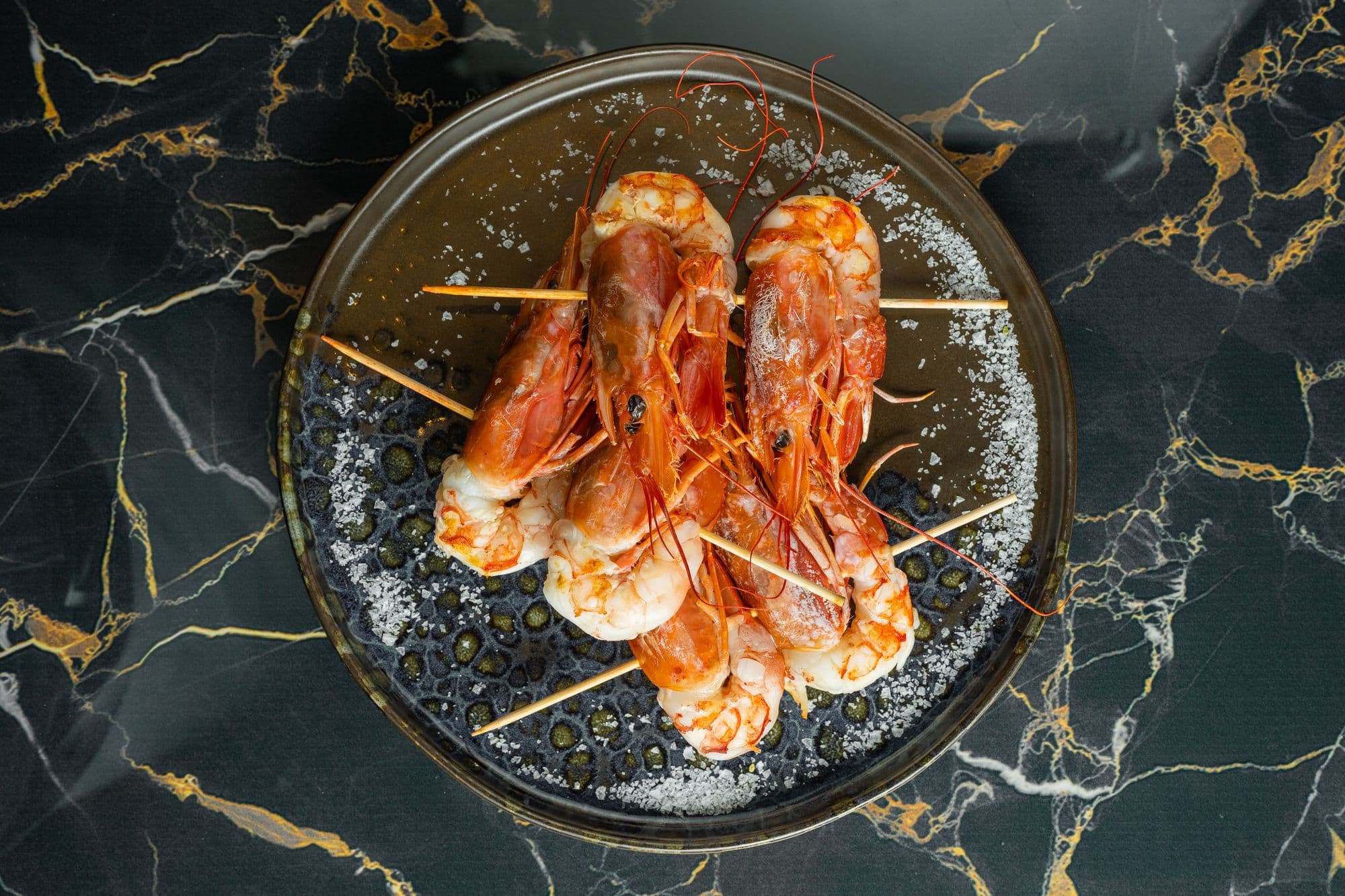
The scampo is a clawed crustacean, Nephrops norvegicus, and not a shrimp. It lives in burrows dug in mud, between 20 and 800 metres deep. Its name, though, has landed on other animals: the FAO catalogue writes that "scampi", born for this species, was soon also used for large shrimps. So when a menu or a counter says "scampi", the word alone does not tell you which animal it means.
The scampo in the official list
In the list of commercial names kept by Italy's Ministry of Agriculture, Nephrops norvegicus has one Italian name: scampo. It belongs to the family Nephropidae.
The same list records other species of the family with "scampo" followed by a qualifier: scampo indopacifico, scampo australe, scampo atlantico, scampo del Pacifico. They are animals of the genus Metanephrops, and the name says where they live. The scampo without an adjective is the Nephrops.
Shrimps have entries of their own. The rose shrimp is Parapenaeus longirostris and the mazzancolla is Melicertus kerathurus, as we explain in our article on Mediterranean shrimps. In the list, none of these species is called scampo.
Where it lives and what it looks like
The FAO catalogue of the marine lobsters of the world, written by Holthuis in 1991, calls it "the single true Nephrops species". The FAO names are Norway lobster in English, langoustine in French and cigala in Spanish.
Its range runs from the eastern Atlantic, from Iceland and the Faroes down to Morocco, and enters the western and central Mediterranean. It is absent from the eastern Mediterranean east of 25 degrees of longitude, from the Baltic and from the Black Sea. A record from Egypt, the catalogue writes, is doubtful.
It lives between 20 and 800 metres, on muddy bottoms in which it digs burrows. It is nocturnal and feeds on detritus, crustaceans and worms. Adults measure 8 to 24 centimetres in total length, usually between 10 and 20.
A scientific name that speaks of Norway
The name norvegicus comes from the place where the species was described. Linnaeus called it Cancer norvegicus in 1758, "in the Norwegian sea". The catalogue explains that the reference specimen was later assigned to the Kullen peninsula in southern Sweden. Among the old synonyms, the sheet also lists Astacus rugosus, described in 1814 by Rafinesque from specimens from Sicily: the same animal had two names, one northern and one Mediterranean, and in the end the older one prevailed.
Local names say as much. In Italian the catalogue records "scampo" and "scampolo", in French "langoustine", in Spanish "cigala" and also "escamarlán", in Portuguese "lagostim", in German "Kaisergranat", in English besides Norway lobster also "Dublin Bay prawn". The catalogue lists local names from sixteen countries, among them Denmark, Greece, Morocco, Tunisia and the Netherlands, and says "scampi" is the Italian name under which the species was sold all over Europe. They are words from different countries for the same animal, which is why the scientific name is the only common key.
How it reproduces
Females carrying eggs are found practically all year round. The eggs are laid around July and the female carries them for about nine months. Those are the two facts the catalogue gives on reproduction, and they are best read together: eggs laid in a specific period, and carried for almost a year.
We write nothing more on size at maturity, lifespan or stock status: the 1991 catalogue is not the right source for such data, and we have not read a more recent assessment.
When and how it is fished
The catalogue says the scampo is fished mostly in spring and summer. It is a general note on the species across its range, not a rule for the Mediterranean, and should be read that way.
It adds something useful for understanding how it lives. On the continental shelf fishing is most productive at dawn, at twilight or on nights with a full moon, when the animals come out of their burrows. On the slope, instead, it is most productive by day. It is fished mostly with bottom trawls, and more rarely with creels.
It is sold fresh and frozen, and also found canned, as peeled tails or prepared as langoustine bisque.
Why "scampi" became too wide a name
The most interesting sentence in the catalogue is the last one in the section on fisheries: under the Italian name Scampi, plural of scampo, the species was sold all over Europe as a highly esteemed food, but soon the name Scampi also came to be used for large shrimps of the family Penaeidae.
It is a passage to read with care. It does not say the use is wrong or illegal. It says the name, born for one precise species, has widened. Anyone reading a menu sees the result: "scampi" can mean the scampo, that is the Nephrops, or a large shrimp sold under that name out of habit.
The Penaeidae are the family of the rose shrimp and the mazzancolla in the ministry's list. Two animals from different families can therefore end up under the same word.
How to tell what you are buying
The scientific name solves the problem, because it is a few more words on the label and it removes any doubt about the species. The European rules on fishery products require the label to give the commercial name and the scientific name, the production method, the catch or farming area and the category of gear used. If it says Nephrops norvegicus, it is the scampo. If it says another name, it is another species, even if the counter sign reads "scampi".
To learn more about labels, there is our article on the swordfish, which gives the full list of required information.
Carpaccio Fish Restaurant in Rome
Carpaccio Fish Restaurant is at Via Sicilia 45, in Rome. The menu page shows what we serve, with dishes named as they are written on the menu. To book, use the Prenota button on the website, or call +39 06 5575012.
See the Carpaccio Fish menu
Menu