Spigola or branzino: the same fish?
Yes. Spigola and branzino are two Italian names for one fish, the European sea bass (Dicentrarchus labrax). The Italian Ministry of Agriculture says so in its official list of commercial fish names (in Italian), which gives this species a single entry with two words: "spigola o branzino". At the fish counter, in a supermarket or in a restaurant, either word will do. Which one people use depends on where they grew up.
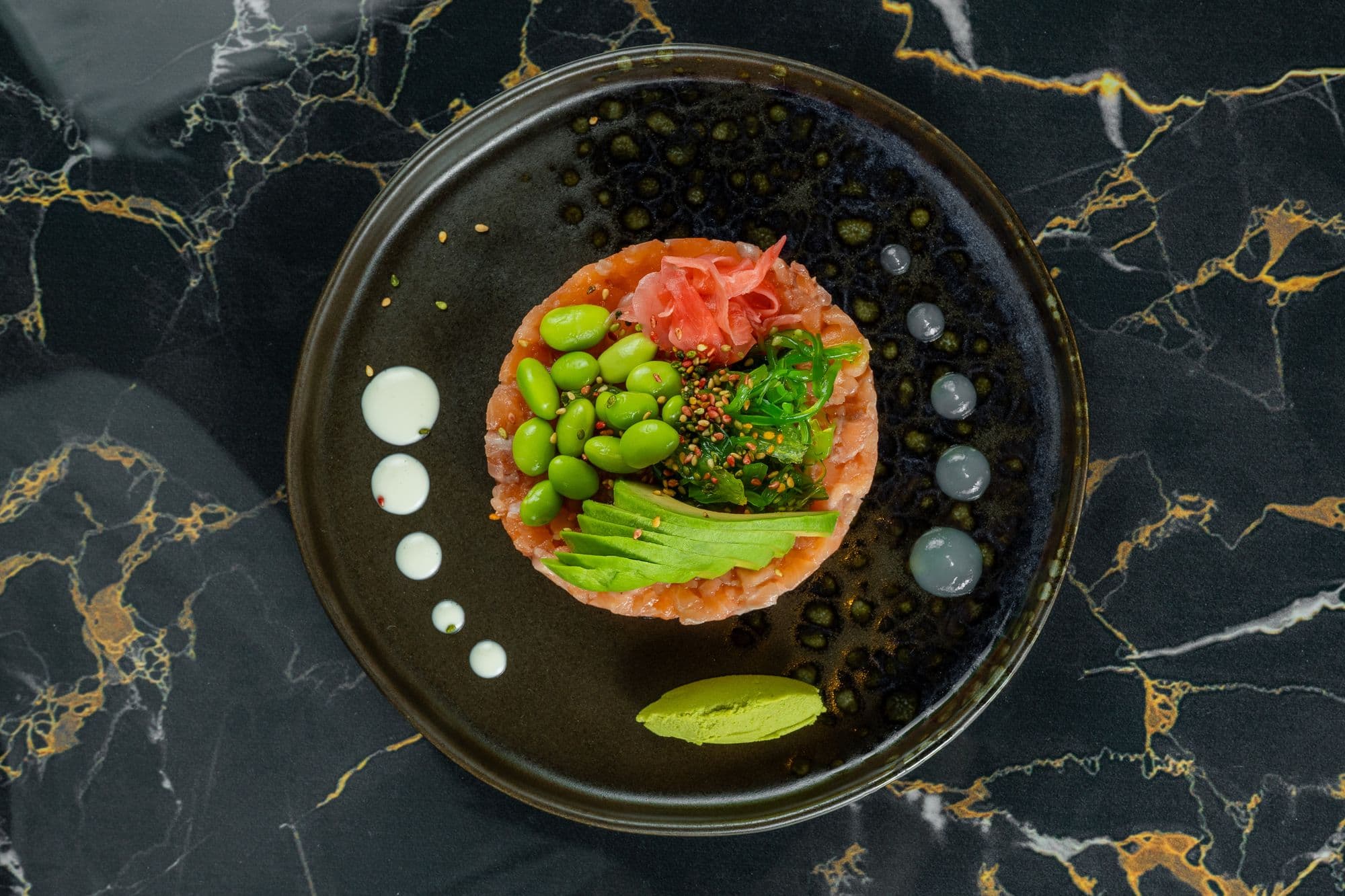
Spigola or branzino: why one fish has two names
The Treccani dictionary puts the main entry under spigola and derives the name from spiga, an ear of wheat, because of the rays of the dorsal fins. Branzino is the Venetian name and comes from the Latin branchiae, the gills.
The same entry lists other local names. In Naples the fish is spinola, in Florence ragno. In Venice the adult is a branzino and the young ones are baìcoli.
The Ministry gives each commercial species one Italian name, valid across the country. For Dicentrarchus labrax it lists two, joined by an "o", which is Italian for "or".
The other "spigole" on the official list
The same list separates fish whose names look alike but which are different species. Next to "spigola o branzino" it has:
- the spotted seabass, spigola puntata, Dicentrarchus punctatus, from the same genus;
- the Japanese seabass, spigola del Pacifico, Lateolabrax japonicus;
- the persico spigola, a name that covers the species of the genus Morone.
If the tag carries one of these three names, the fish is not Dicentrarchus labrax. "Spigola" or "branzino" on their own always mean that species. To remove any doubt, the scientific name is written next to it on the label.
What kind of fish it is: where it lives and what it eats
The FAO fact sheet describes the sea bass as fairly elongated, with a moderately forked tail. It lives along coasts, in estuaries and in brackish lagoons, and sometimes moves up into fresh water. It tolerates temperatures from 5 to 28 °C and salinity from 3 parts per thousand up to full sea water. Treccani places it in the coastal and brackish waters of the Mediterranean and the eastern Atlantic.
It feeds on small fish, shrimp, crabs and cuttlefish. In the Mediterranean it spawns from December to March, while Atlantic populations spawn until June. Treccani adds that between January and March sea bass gather in tight groups.
Before modern fish farms, sea bass was raised in the very places where it lives: coastal lagoons and tidal basins.
Sea bass and sea bream: how not to mix them up
Next to the sea bass, the fish counter usually has the gilthead sea bream, orata in Italian. They are different species: the orata is Sparus aurata, and on the Ministry's list it has a single name, "orata".
The difference shows in the shape. The sea bass is long and slender. According to the FAO, the sea bream has an oval body, deep and flattened at the sides, silver-grey, with a golden band on the forehead between the eyes, closed off by two dark areas, and a large black spot where the lateral line begins, on the upper edge of the gill cover. In young fish the golden band is less distinct.
The farming history differs too. Artificial breeding of the sea bream first succeeded in Italy in 1981-82, and Greece is the leading producer. A farmed sea bream reaches its first commercial size, 350 to 400 grams, in about a year.
Wild or farmed: what the label says
According to the FAO, the sea bass was the first marine species other than salmon to be farmed commercially in Europe, and in its 2009 fact sheet it is the most important farmed fish in the Mediterranean. Mass production of fry began in the late 1960s, and by the late 1970s the techniques were established in almost every country around the basin. The main producers are Greece, Turkey, Italy, Spain, Croatia and Egypt.
The method changes the timing. In intensive farms the young fish reach 400 to 450 grams in 18 to 24 months. In a lagoon, with extensive farming, a 400 to 500 gram sea bass takes about 37 months.
To know what you are buying, read the tag. European labelling rules require fish sold to consumers to show:
- the commercial name and the scientific name, here "spigola o branzino" and Dicentrarchus labrax;
- the production method, with the word "wild-caught" or "farmed" (on an Italian tag, "pescato" or "allevato");
- the catch or farming area and, for wild fish, the category of fishing gear;
- whether the product has been defrosted.
For sea bass caught in the Mediterranean, which the FAO calls area 37, the area number alone is not enough: the same rules ask for the subarea or division. For farmed fish, the label gives the country where the fish gained more than half of its final weight, or spent more than half of its farming period.
How to cook sea bass
According to the FAO, sea bass is sold mostly whole and fresh, and fresh fish usually keeps no more than four or five days on ice. Only a small share arrives frozen, in single-fish packs. Some Italian companies buy Greek sea bass and repack it in a modified atmosphere, which makes it last longer.
Whole, it suits cooking methods that hold it together: baked, salt-crusted, grilled. Filleted, it cooks in a few minutes, and it is the most practical format in a restaurant, because the fillet reaches the table without bones. Raw, it is cut into thin slices for a carpaccio or into cubes for a tartare.
Seafood cooking in Via Sicilia
Carpaccio Fish Restaurant is at Via Sicilia 45, a short walk from Via Veneto, next to Carpaccio Beef Restaurant: carpaccio and seafood cooking.
The full menu is on the menu page. To book a table, call +39 06 5575012 or use the Book button on the site.
See the Carpaccio Fish menu
MenuFrequently asked questions
Do spigola and branzino taste different?
No, because they are the same fish. Differences from one sea bass to another depend on size and on where the fish was caught or farmed, not on the name on the tag.
What does it mean that sea bass is euryhaline?
It is the word Treccani uses: a fish that lives in waters of very different salinity. It moves from open sea to brackish lagoons and estuaries, up to fresh water, and that is also why it can be farmed in a lagoon.