Fermo pesca: what it is, who it applies to and why the dates change
The fermo pesca is a mandatory pause in fishing activity, which Italy's Ministry of Agriculture sets for boats in certain categories and for a limited period. It is not a single rule for the whole country: it changes from one sea to another and from one year to the next, which is why anyone searching for "the dates of the fermo" finds different answers. This article explains how a fermo is built, who it concerns and why it is worth always checking the up-to-date dates.
A closure for the fleet, not for a species
Two different things are often confused. The fermo pesca we are talking about concerns vessels: for a period, a group of fishing boats stays in port. This is the case for bottom trawling, for which the ministry decrees a mandatory temporary stop.
Another thing is a closure for a species. In our article on Mediterranean swordfish we saw an example: international rules prohibit catching that species in certain periods of the year, whatever the type of boat. In the first case a boat is stopped, in the second a fish is protected.
How a fermo is built
The fermo we are talking about provides for a mandatory temporary stop for vessels authorised for bottom trawling: otter trawls, rapid-sweep nets and pair trawls. It applies to vessels registered in the maritime districts listed in the measure, and the periods change by stretch of coast, from the northern Adriatic to the Tyrrhenian and Liguria.
In Sardinia and Sicily the period is set by the regions, within a minimum number of consecutive days.
There are exceptions too. For shrimp fishing, for example, vessels may stop in a district other than the one where they are registered, and deep-water shrimp boats from some Ligurian districts are exempt from the obligations.
The purpose stated by the ministry is to ensure a balance between fishing activity and marine resources, and to take measures that favour repopulation.
Why the dates change
There are three reasons why one calendar does not fit everyone. The first is geographic: stretches of coast have different windows. The second concerns the gear: the rules apply to precise categories of nets. The third is local: Sardinia and Sicily have periods set by the regions.
Then there is a reason of time: the measures are dated and separate, and they are renewed from year to year. A date read without its year may refer to a closure that is already out of date.
Who bears the costs
Stopping vessels costs fishing businesses money, and the European Union provides aid. For the most recent years the ministry publishes the criteria and the funds for granting aid to businesses that carried out the mandatory stop.
This does not change what the consumer sees at the counter, but it gives an idea that the fermo is not an individual fisher's choice: it is an obligation with public support.
What it means for someone buying fish
Caution is needed here. The fermo concerns part of the fleet for a limited period, and without data we do not know how much it affects the range at a counter or on a menu. That is why we do not write sentences such as "in that period the fish is better" or "worse": we have no source that says so.
One thing we do know. Under the European rules on fishery products, the label on fish must give the catch area and the category of gear used. That is the information that lets you link a product to a sea and a type of fishing, and so, if you want, to a closure calendar. In our article on the swordfish you will find the full list of required information.
How to read a fermo notice
When you face an article or a press release about a fermo, there are six things to look for. The year, first, because without a year a date is worth nothing. The maritime districts or stretches of coast it refers to. The categories of gear involved. The length, and whether the days are consecutive. The exceptions, such as those for deep-water shrimp. The measure that sets it, national or regional.
If one of these six elements is missing, the text is not complete: it may be news, it is not a calendar.
Where to look for up-to-date dates
The real dates are on the Ministry of Agriculture's website, in the section on fisheries and aquaculture, and on the regions' websites for Sardinia and Sicily. If you read a date in a newspaper or on a cooking site, check that it has the year and gives its source.
Our advice is simple: a closure without a year is not information. A closure with a year and a source is.
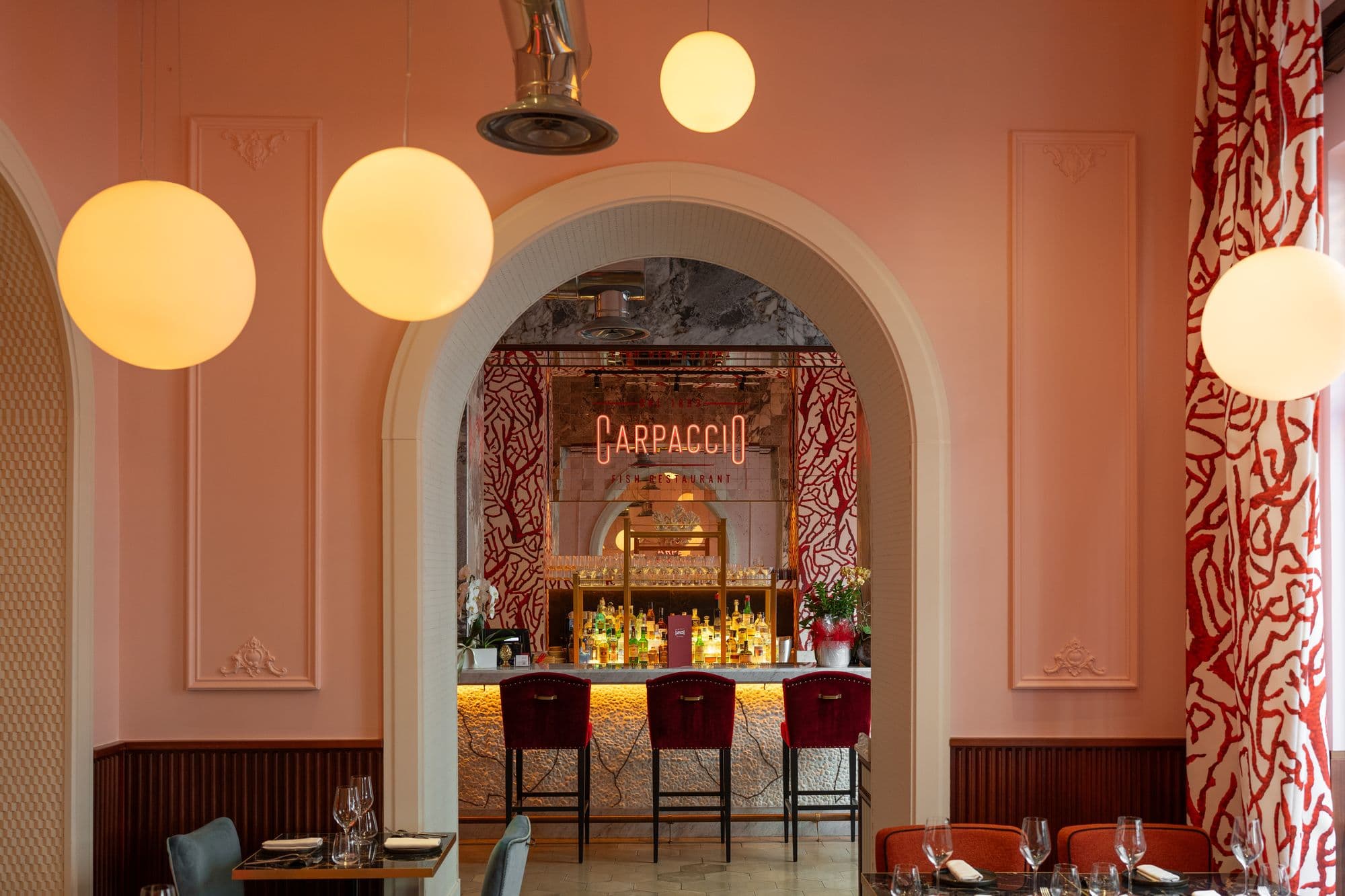
Carpaccio Fish Restaurant in Rome
Carpaccio Fish Restaurant is at Via Sicilia 45, in Rome. The menu page shows what we serve, with dishes named as they are written on the menu. To book, use the Prenota button on the website, or call +39 06 5575012.
See the Carpaccio Fish menu
Menu